
Solution
AI Coding Seat Utilization and Seat Waste
Updated 2026-08-04 · AI coding seat utilization
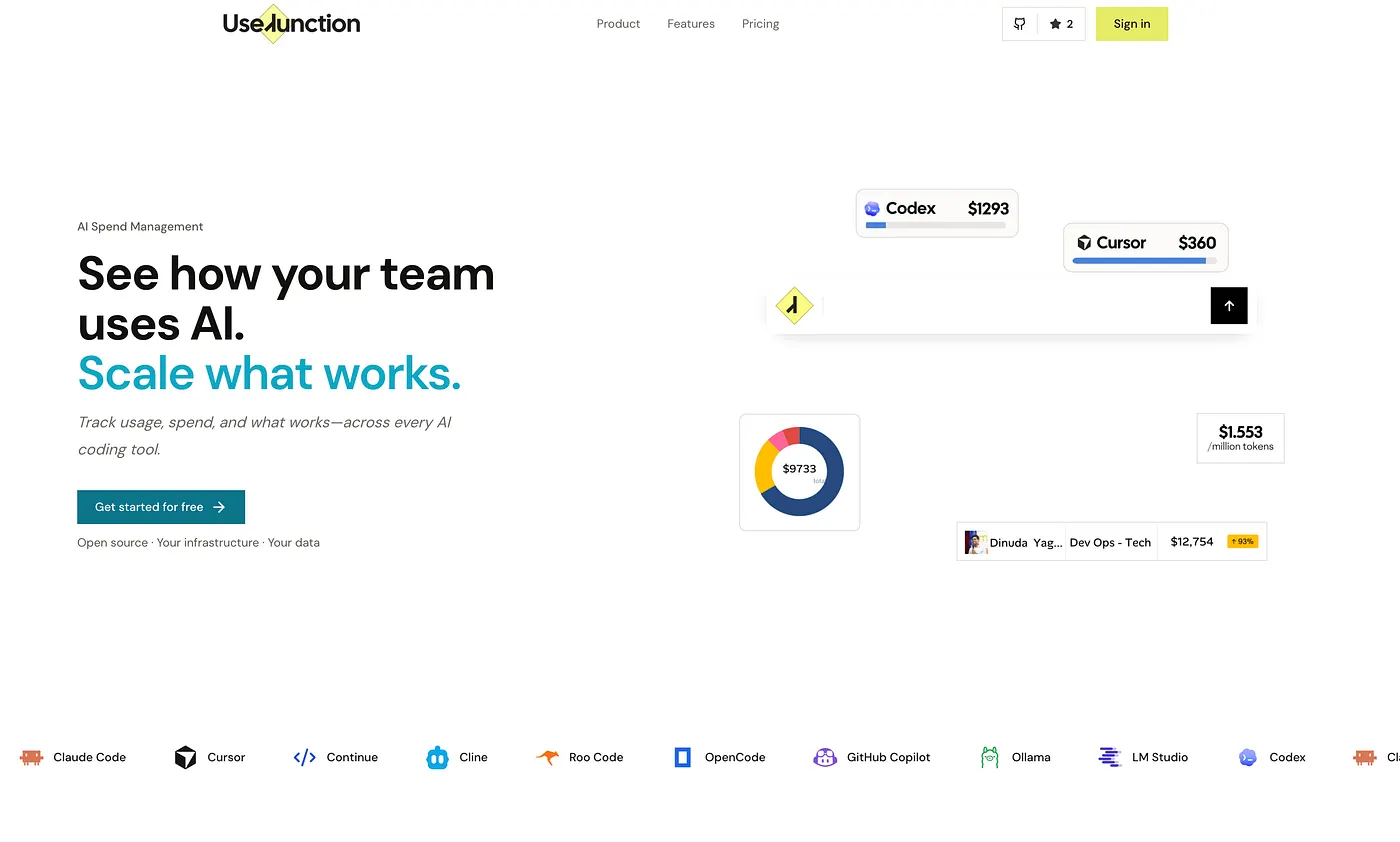
Know which seats are actually being used
A paid seat with no activity can mean an idle subscription, a developer using a different tool, or a device that is not reporting. UseJunction keeps those cases visible instead of collapsing them into one number.
Review active usage, last-seen coverage, plan cycles, and tool adoption together before reclaiming or expanding seats.
Measure utilization across vendors
Cursor, Claude Code, Codex, and Copilot each expose different usage surfaces. UseJunction gives platform teams one comparison layer across the AI coding fleet.
See quota pressure and heavy users alongside idle seats so renewal decisions reflect both waste and capacity risk.
Turn seat waste into an operating workflow
Start with visibility, validate the signal with the team owner, and then reclaim, reassign, or change the plan. UseJunction is designed to support that workflow without forcing policy or traffic interception.
Coverage and device-health signals help you avoid penalizing a developer simply because an agent is unhealthy or not enrolled.
FAQ
- How do I find unused Cursor seats?
- Enroll the relevant devices and compare Cursor activity, last-seen coverage, and purchased seat or cycle context. UseJunction surfaces inactive and uncovered cases before renewal.
- Can seat utilization include Claude Code and Codex?
- Yes. UseJunction is built to compare multiple AI coding tools in one organization view, including Claude Code and Codex alongside Cursor and Copilot.
- Does seat utilization mean employee productivity tracking?
- No. The focus is tool adoption, plan usage, cost, device coverage, and health. There is no keystroke surveillance or browser capture by design.
Get started
Deploy open-source or upgrade to Managed.